Accelerate your Spiritual Development.Join the Watkins Wisdom Academy and learn from the best spiritual teachers in the world.
www.watkinsmagazine.com
Marco Visconti9 min

Rituals of Awareness: How Thelema Transforms the Ordinary into the Sacred

Every few decades, a generation of seekers rediscovers the word ‘magick' and wonders what it truly means. Not the stage trick, not the cinematic cliché, but that ancient pursuit of transformation where consciousness becomes the laboratory and the self the matter under refinement. Thelema, a spiritual path that infuses daily life with purpose, offers seekers the opportunity to transform mundane routines into rituals of awareness and alignment.

Imagine integrating spiritual intention into your morning routine, using each breath or mundane task as a step toward self-discovery. My new book, Aleister Crowley’s Mysticism: A Practical Guide, was born from this very question. What does Thelema, the spiritual current Aleister Crowley founded (or maybe channelled?) in 1904, offer to people today? Can a philosophy conceived at the turn of the 20th century still speak to a world of wellness influencers, self-optimisation and perpetual distraction? The short answer is yes. In fact, I believe Crowley’s Thelema has never been more relevant, precisely because it demands that we turn away from slogans and superficiality to face the most difficult of all initiations: the knowledge of who we truly are.  

Magick as conscious living

In my first book, I outlined the core structure underlying Thelemic magick, defining it as Crowley’s integrated system of rituals, symbolic frameworks and philosophical exercises intended to cultivate the Aspirant, or spiritual seeker. These foundational practices equip the practitioner to construct an internal, symbolic ‘temple’. However, the focus of Mysticism shifts beyond the establishment of this internal edifice; it addresses the enlivening of the spiritual centre within. Crowley notes that ‘Magick is the art and science of causing change to occur in conformity with Will’. While this definition may appear straightforward, contemporary interpretations often conflate it with mere desire. Yet, within Crowley’s system, ‘Will’ denotes not simple wish fulfilment, but rather the ‘True Will’, something we can understand at first as each individual’s essential purpose or deepest vocation. This concept transcends personal preference, representing a universal current that, according to Crowley, aligns human intention with the fundamental order of the cosmos. For example, imagine someone who is artistically inclined yet feels pressured to pursue a career in finance for its perceived stability. Discovering True Will in this context might mean embracing their innate passion for painting, which fulfils their unique purpose and brings true fulfilment, rather than merely satisfying societal expectations. In recognising this distinction, the practice of Thelemic magick becomes a disciplined alignment with a higher calling, rather than a pursuit of transient desires, facilitating a transition into the deeper territory explored in Mysticism. Thelema, from the Greek for ‘will’, asks us to find our spiritual calling, not just ambition. In Magick Without Tears, Crowley said if one acts in harmony with Will, the inertia of the Universe is at your back’. Living consciously means aligning with this current. This demands more than the pursuit of perfect efficiency. True Will is not a productivity hack. It is a long practice of surrender, listening and letting life speak through us.  

The Holy Guardian Angel

Thelemic mysticism centres on a single, incandescent goal: the Knowledge and Conversation of the Holy Guardian Angel (HGA). In Thelemic tradition, the HGA is understood as an independent spiritual consciousness that reflects or reveals a person’s highest, most authentic self. I often tell my students that everything else – rituals, meditations, prayers, even philosophy – is secondary to this one experience. The Angel is not a metaphor for intuition or higher self, though it can appear that way at first. It is an independent consciousness that mirrors the deepest truth of who we are meant to become. Crowley called communion with it the essential work of every magician. When I first attempted a formal invocation of my Angel, I did not encounter dramatic signs – no lightning bolt, no sudden change in the atmosphere. Instead, silence emerged: an unsettling, sentient quiet that seemed to observe from within. This silence has endured, growing clearer with attentive listening. In Mysticism, I ground this experience. The HGA isn’t just for ascetics or secretive initiates. Anyone with discipline and sincerity can access it. I guide readers in building a daily practice through solar adorations, meditation, journalling and ceremonial prayer. These aren’t relics; they are technologies of consciousness. They teach the mind to focus, the body to act in Will, and the heart to hear the Angel’s whisper.
TRY THIS: To begin integrating these practices into everyday life, start with a simple morning solar adoration. Upon waking, stand facing east toward the rising sun, take a deep breath, and either silently or aloud express gratitude for the sun’s energy. Visualise its light filling and energising you, aligning your being with the universe. This practice anchors the mind and sets an intentional tone for the day.

Contemporary culture often valorises spontaneity, yet the absence of structured practice can lead to fleeting or unsustainable inspiration. Ritual, therefore, serves a critical practical function: it provides a formalised framework through which we can consistently cultivate and manifest transformative states of consciousness. Crowley’s designation of the invocation of the HGA as the ‘Supreme and Complete Ritual’ was not an endorsement of superstition, but rather an articulation of ritual as a systematic methodology for psychological and spiritual change. For example, lighting a candle in a ceremonial context signals the demarcation of a sacred space, facilitating focused attention and intention. Each ritual gesture and utterance operates as a cognitive and symbolic marker that supports the practitioner’s engagement with deeper layers of consciousness. For me, ritual is a mirror. At the altar, performing the ‘Star Ruby’ or ‘Liber Resh’, I meet restlessness, fear and pride. Every mispronunciation and shaky motion reflects an inner flaw. Over time, ritual becomes psychology in motion, revealing where energy flows or stagnates. For readers accustomed to mindfulness apps and guided meditations, this might sound alien, yet the principle is the same. Both ritual and meditation are methods of patterning awareness. Where the modern mind seeks calm, Thelema seeks awakening. One quiets the waves, the other learns to surf them.  

The inner alchemy of the Thoth Tarot

The ancient alchemists spoke of turning lead into gold. Crowley took that metaphor literally, treating it as a description of the soul’s evolution. The Great Work, he wrote in Liber ABA: Magick in Theory and Practice, is ‘the uniting of the Microcosm with the Macrocosm’. The substances being transmuted are not metals but aspects of ourselves: the heavy lead of ignorance, the volatile mercury of desire, the burning sulphur of passion. In my book, I explore how these alchemical ideas correspond to practical work, both psychological and mystical. Each ritual, meditation or tarot pathworking (a form of guided meditation through the path of the tarot) becomes a stage of refinement. The goal is not perfection, but integration.  Magicians have always known that wholeness requires the marriage of opposites. The demons we fear to face are the very guardians of our treasure. During my years of teaching, I have seen many aspirants struggle not with occult technique but with self-honesty. We can memorise correspondences and recite invocations, yet if we refuse to look at our shadow, all the fears, resentments and small cruelties we carry, our magick will remain inert. Thelemic practice demands brutal sincerity. Only by confronting what is base in us can we extract the gold of consciousness. The Book of Thoth, along with the Thoth Tarot co-created by Crowley and Lady Frieda Harris, represents a significant and sophisticated integration of Western esoteric traditions. Far from being limited to divinatory or fortune-telling purposes, the tarot, and particularly the Major Arcana, functions within this system as a structured set of archetypal symbols, each encapsulating distinct psychological and spiritual processes. In Mysticism, I devote an entire section to elucidating how the Major Arcana can be approached as stages of personal and spiritual initiation, offering a framework for practitioners to engage in contemplative and transformative work. This contextualisation enables readers new to the tarot to comprehend its role not merely as a tool for prediction, but as a dynamic text for self-enquiry and inner development within the Thelemic tradition. When I first began pathworking through the cards, I devoted a week to The Fool. Each morning, I meditated on the image: the green figure, the tiger beside him, the sun shining behind. At first, the symbolism felt enigmatic. Then, understanding surfaced: innocence as the courage to begin again, to step into the unknown without guarantees. That week shifted my approach to magick. The tarot responds when approached with attention and openness, serving as a mirror for the soul’s journey. The beauty of the Thoth Tarot is its universality. It doesn’t matter if one is a seasoned magician or a curious beginner; the cards can serve as daily companions, each reflecting an aspect of the path. They teach us to read the symbolic world we inhabit, to recognise synchronicities as footnotes from the divine.  

Thelema and the modern seeker

Aleister Crowley’s public reputation has often been shaped by sensationalised accounts that characterise him as the ‘wickedest man’ or cast him as a cultural anti-hero. Such portrayals tend to obscure the multidimensional nature of his legacy, which encompasses both his controversial public persona and his sustained, rigorous engagement with mystical and philosophical inquiry. Beneath the layers of notoriety, Crowley emerges as a methodical practitioner who systematically explored the frontiers of consciousness through both experiential and intellectual means. The spiritual system of Thelema should not be dismissed as a mere historical curiosity rooted in Edwardian eccentricity. Rather, it serves as a sophisticated and adaptive philosophical framework for personal transformation, offering contemporary seekers a structured approach to self-actualisation informed by psychological, esoteric and cross-cultural currents. I meet many seekers who are ‘spiritual but not religious’. They meditate, read Jung and burn incense. Often, what they lack is a framework, that is, a way to blend the mystical with the ordinary.  Thelema offers that. It insists every act, from breakfast to love, can express True Will in alignment with the universe. To quote from Thelema’s central holy text, Liber AL vel Legis: ‘Every man and every woman is a star’. The task is not to mimic another’s orbit, but to shine as oneself. This concept of practical magick refers not to a withdrawal from reality, but to the intentional cultivation of heightened awareness in daily activities. For example, the simple act of preparing a cup of tea becomes an opportunity to engage in silent adoration of the Sun, aligning oneself with a universal, cosmic rhythm.  These seemingly minor practices exemplify Thelema’s broader thesis: rather than relegating the sacred to specialised or exceptional circumstances, the practitioner continually integrates spiritual intention into the fabric of ordinary life. Over time, deliberate acts foster a mode of existence in which every moment is imbued with meaning, illustrating how Thelemic magick achieves its central aim of realising the sacred within the immanent contours of daily experience. I warn students not to make Thelema a religion of rules. Crowley despised blind obedience. His was the method of science, the aim of religion. Experiment, observe, refine. In that spirit, my book Aleister Crowley’s Mysticism gives exercises, not commandments, for testing teachings through personal experience. Some readers may find the path too austere; others, intoxicating. Either response is fine. Thelema does not demand belief; it demands work. If a ritual feels meaningless, investigate why. If meditation stirs discomfort, ask what part of you resists silence. Thelema’s great gift is autonomy. It does not promise salvation; it offers a toolkit for self-transformation. It’s essential to remember that struggle and doubt are normal parts of this journey. Embracing these challenges leads to growth and a deeper understanding. When faced with setbacks, see them as opportunities for introspection and perseverance. Ultimately, it’s through these trials that mastery and self-knowledge are truly cultivated.  

A note on appropriation

When I look at the current spiritual landscape, I see both hunger and confusion. There is a genuine desire for depth, yet most people have been trained to seek it in fragments: a little astrology here, a bit of mindfulness there, a taste of ceremonial magick and perhaps a sprinkling of witchcraft. This eclecticism speaks to an honest yearning for meaning, but it also reveals a wider disconnection. In our haste to gather practices from every corner of the globe, we sometimes forget that spirituality is not a buffet of exotic flavours to sample – it is a language of transformation that demands grammar, structure, and respect for its roots. Conversations around cultural appropriation have sharpened that awareness. These discussions are often necessary, exposing the harm that arises when sacred traditions are commodified or reduced to aesthetic gestures. When ancient rites become fashion accessories or spiritual tourism, something vital is lost: context, lineage and the living breath of devotion that gave those rites power. As a teacher and practitioner, I share that concern deeply. But I also believe that what Aleister Crowley accomplished – and what Thelema continues to offer – is something different from appropriation. It is syncretism, and the distinction matters. Syncretism is not plundering other traditions; it is listening to them until their hidden harmonies emerge. It is the recognition that beneath the surface differences of mantra and mudra, pentagram and prayer wheel, lies a shared grammar of awakening. When Crowley borrowed from yoga and Buddhism long before it was fashionable, he did so with the curiosity of a scientist and the reverence of a mystic. He saw no contradiction between invoking Egyptian gods and practising pranayama because he understood that both were languages of consciousness pointing towards the same ineffable truth. This, to me, is what distinguishes genuine syncretism from cultural theft: integration versus consumption. Thelema does not strip symbols of their meaning for novelty’s sake, but recontextualises them within a universal framework of initiation. Each element – Hermetic, Eastern, psychological – is preserved, honoured and made to converse with the others. The result is not a patchwork of borrowed rituals but a living synthesis – a coherent current in which Isis and Shiva, the Qabalah and the Upanishads, can coexist as facets of the same jewel. What matters in this approach are results. Does the method awaken the student to the Angel, to that living sense of purpose that transcends culture, creed and geography? If so, the practice has fulfilled its aim. In that sense, Thelema was and remains the first truly global spirituality, rooted in respect for tradition, yet fearless in its quest to unite them all within the singular light of consciousness.  

Closing the circle

Every book I write is, in truth, a diary. I share what I have learnt through years of devotion, failure and renewed effort. There are days when I still feel like that young magician performing his first ritual, uncertain whether anyone, or anything, is listening. Yet time and again, the universe answers, often in subtle ways: a phrase overheard, a dream, a sudden clarity at dawn. Those are the moments when I know the Angel is near. If The Aleister Crowley Manual taught readers how to build the temple, then Aleister Crowley’s Mysticism teaches them how to inhabit it. It is not a book of theories but of practices: breathing, meditating, invoking, reflecting. Each exercise is a doorway to self-knowledge. Each failure is part of the initiation. To live magically is to live consciously, to recognise that every heartbeat is a ritual, every breath a prayer, every thought a spell cast into the fabric of existence. In a world that prizes distraction, this is a radical act. Crowley’s wisdom endures because it reminds us that enlightenment is not somewhere else. It begins exactly where we stand, if only we dare to look within.

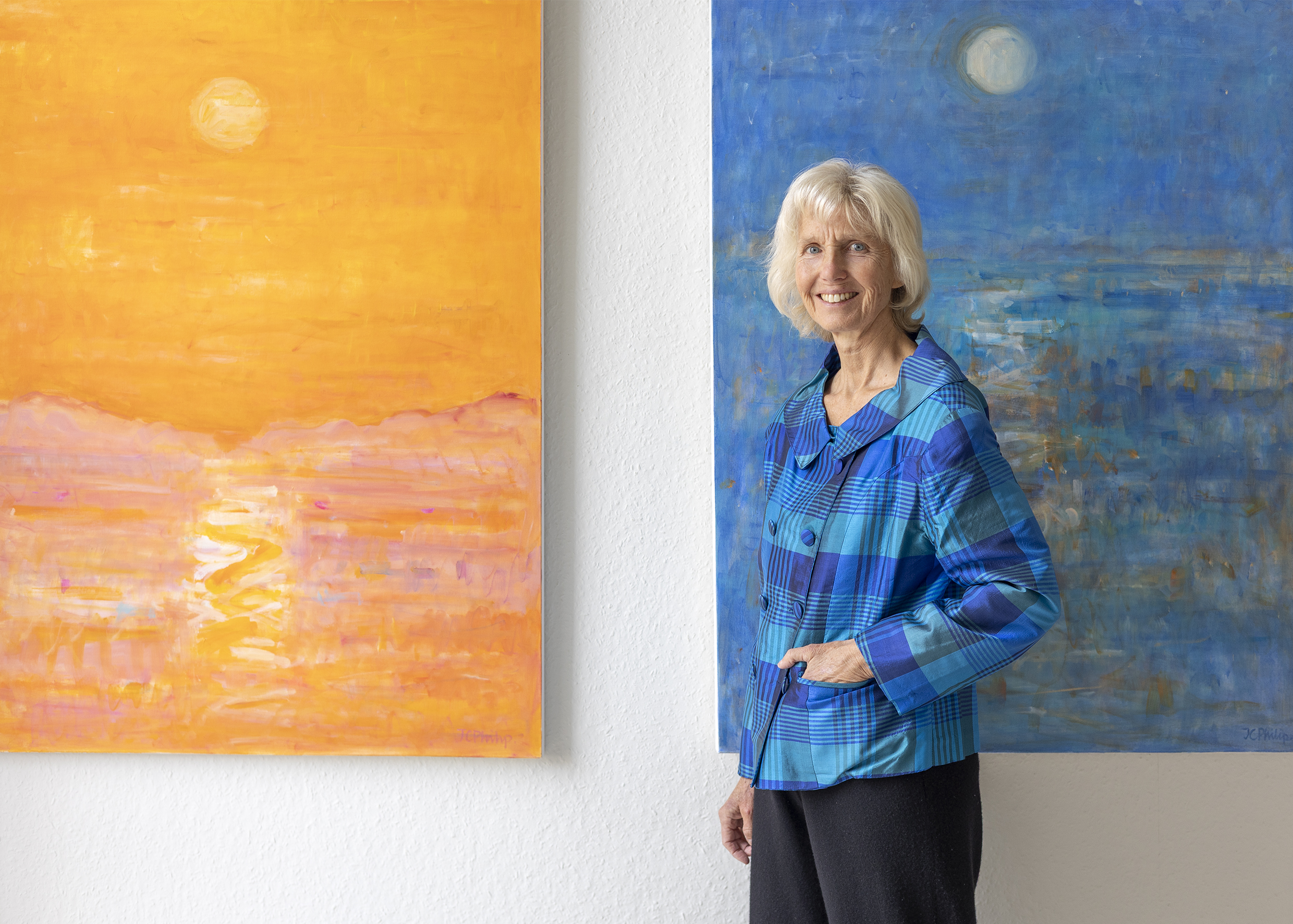
Marco Visconti

Marco Visconti is a lifelong practitioner of the Western Esoteric Tradition, with a particular interest in Thelema and Crowleyana. He was responsible for the translation of numerous key esoteric texts from English to Italian, such as Michael Bertiaux’s Lucky Hoodoo and Cosmic Meditation.

He is the author of The Aleister Crowley Manual: Thelemic Magick for Modern Times, as well as his new book Aleister Crowley’s Mysticism: A Practical Guide (both £20 each, Watkins Publishing), out now.

marcovisconti.org

Come and join us as we explore the world of holistic and spiritual wellness.

Come and join us as we explore the world of holistic and spiritual wellness.

Your subscription could not be saved. Please try again!
Your subscription has been successful!

Come and join us on our socials!